
How to earn EuroBonus points faster in Norway (2026)

Co-founder of Penge · Updated 17 September 2026 · 8 min read
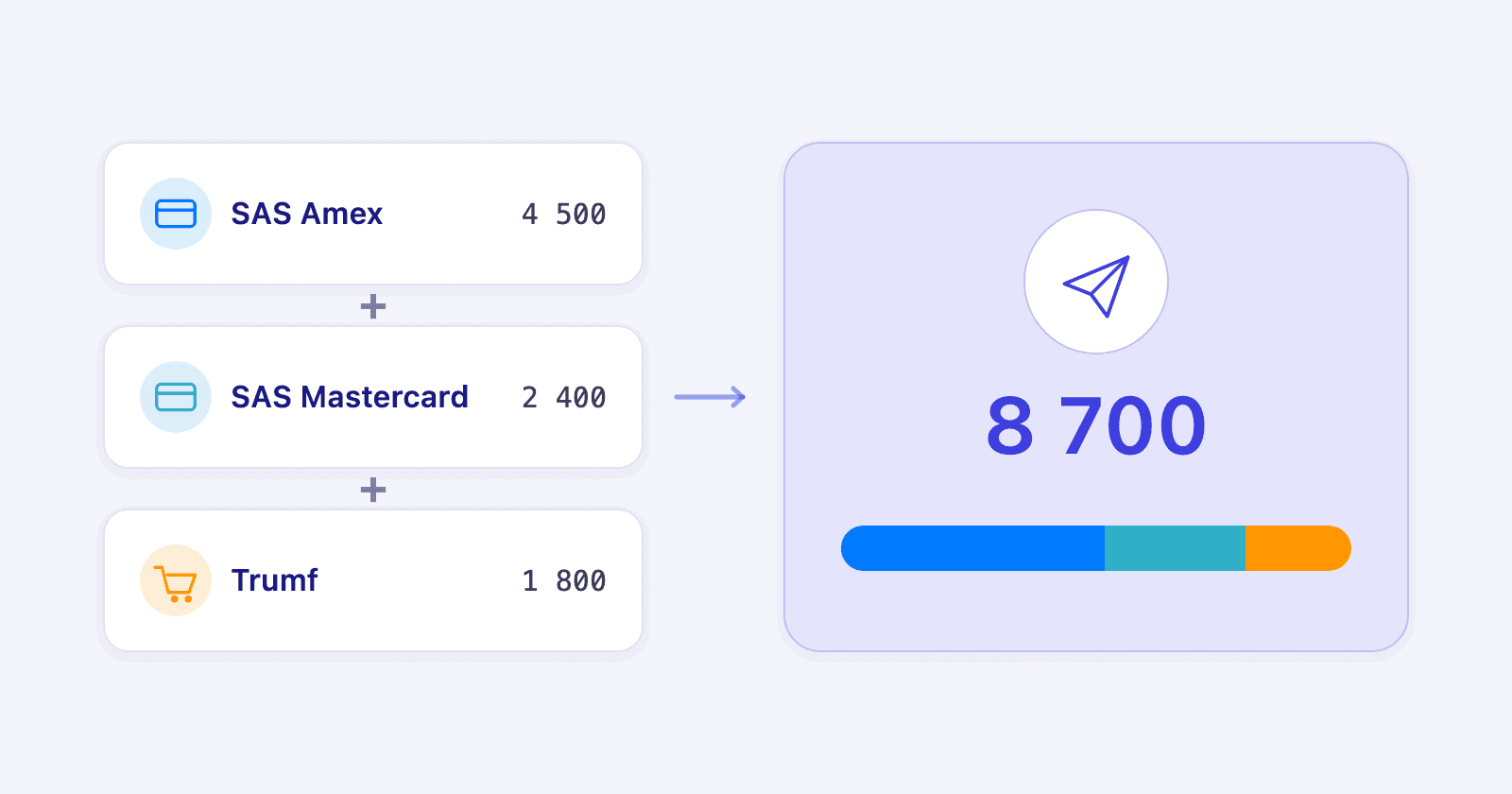
SEB raised the fee on the SAS EuroBonus Mastercard Premium by 43% on 1 September 2026, and the SAS Amex Classic stops being free on 1 November. Here is what each card costs, what it earns, and the spending each fee needs before it pays for itself.
About these numbers
Key takeaways
- The three-card setup costs 5,148 kr a year in fees: SAS Amex Premium at 1,800 kr, SAS EuroBonus Mastercard Premium at 3,348 kr, and the Trumf credit card at nothing.
- SEB raised the Mastercard Premium fee from 2,335 kr to 3,348 kr on 1 September 2026, a 43% rise. The standard SAS EuroBonus Mastercard went from 465 kr to 588 kr.
- SAS Amex Classic has been free since launch. From 1 November 2026 it costs 30 kr a month, 360 kr a year. Cancel before that date and you pay nothing.
- Both SAS Amex Premium and SAS EuroBonus Mastercard Premium earn 15 EuroBonus points per 100 kr. Spending 150,000 kr on the Amex in a calendar year unlocks a 2-for-1 voucher.
- Counting a point at 10 øre, the Mastercard Premium fee now needs about 223,000 kr of spending on that card to pay for itself, up from about 156,000 kr.
How do you earn EuroBonus points fastest in Norway?
Use the SAS Amex Premium for everyday spending until you reach 150,000 kr in a calendar year, which unlocks a 2-for-1 voucher, then switch to the SAS EuroBonus Mastercard Premium. Use the Trumf credit card through Trumf Pay in Norgesgruppen stores. The two paid cards now cost 5,148 kr a year together, so the setup needs high spending.
That setup got more expensive in 2026. SEB raised the fee on both SAS EuroBonus Mastercard cards on 1 September, and American Express ends the free ride on the SAS Amex Classic on 1 November. The rest of this guide is the current price of each card, what it earns, and the spending its fee needs before it pays for itself.
What do the EuroBonus cards cost?
SAS Amex Classic is free until 31 October 2026 and 360 kr a year after that. SAS Amex Premium costs 1,800 kr a year and SAS Amex Elite 6,900 kr. The SAS EuroBonus Mastercard costs 588 kr and the Mastercard Premium 3,348 kr. The Trumf credit card has no annual fee at all.
| Card | Annual fee | Points / 100 kr | Best for |
|---|---|---|---|
| SAS Amex Classic | 0 kr, 360 kr from 1 Nov 2026 | 10 | A free start; 2-for-1 in Europe at 100,000 kr a year |
| SAS Amex Premium | 1,800 kr | 15 | Everyday spending up to 150,000 kr; unlocks the worldwide 2-for-1 voucher |
| SAS Amex Elite | 6,900 kr | 20 | Heavy spending and frequent travel; a second voucher at 300,000 kr |
| SAS EuroBonus Mastercard | 588 kr | 10 | Places that do not take Amex, on a smaller budget; points stop at 200,000 kr a year |
| SAS EuroBonus Mastercard Premium | 3,348 kr | 15 | Spending after the Amex hits 150,000 kr, and SAS Premium seats at the Economy points price |
| Trumf credit card | 0 kr | ~40.5* | Norgesgruppen stores only, paid through Trumf Pay |
*The Trumf card gives 2% Trumf bonus in Norgesgruppen stores and 1% more when you pay with it in Trumf Pay, so 3% in total.[6] Set up automatic transfer to EuroBonus at 13.5 points per Trumf krone and that 3% works out to about 40.5 EuroBonus points per 100 kr.[7] The Mastercard Premium also gives 20 points per 100 kr abroad in local currency and 25 on tickets bought at sas.no.[4]
What changed in 2026?
SEB raised the SAS EuroBonus Mastercard from 465 kr to 588 kr a year on 1 September 2026, and the Mastercard Premium from 2,335 kr to 3,348 kr, a rise of 43%. American Express gives the SAS Amex Classic a fee of 30 kr a month from 1 November 2026, after years of costing nothing.
| Card | Was | Now | From |
|---|---|---|---|
| SAS EuroBonus Mastercard | 465 kr / year | 588 kr / year | 1 September 2026 |
| SAS EuroBonus Mastercard Premium | 2,335 kr / year | 3,348 kr / year | 1 September 2026 |
| SAS Amex Classic | 0 kr / year | 360 kr / year (30 kr a month) | 1 November 2026 |
SEB said the rise covers higher costs of running and developing the EuroBonus programme, and it applies to new and existing cardholders alike.[8] The effective interest went up at the same time: from 30.69% to 32.85% on the standard Mastercard, and from 33.87% to 39.52% on the Premium.[4][5] That only bites if you carry a balance, and carrying a balance costs far more than the points are worth.
American Express tells existing cardholders at least two months before a fee changes, and the new fee starts automatically unless you object in writing. Cancel the SAS Amex Classic before 1 November 2026 and you never pay it.[9]
How much do you have to spend before a fee pays off?
Count a EuroBonus point at 10 øre. The SAS Amex Premium fee of 1,800 kr then needs about 120,000 kr of spending a year to cover itself. The SAS EuroBonus Mastercard Premium at 3,348 kr needs about 223,000 kr, up from about 156,000 kr before September. The Trumf card needs nothing, because it is free.
The arithmetic is short enough to redo with your own numbers. A card giving 15 points per 100 kr returns 1.50 kr of value per 100 kr spent if you count a point at 10 øre. Divide the annual fee by that and you have the spending the fee needs. Ten øre is a fair working figure for points spent on flights; if you get 20 øre out of yours, halve every number in the table, and if you only get 5 øre, double them.
| Card | Annual fee | Spending needed |
|---|---|---|
| SAS Amex Classic (from 1 Nov 2026) | 360 kr | 36,000 kr |
| SAS Amex Premium | 1,800 kr | 120,000 kr |
| SAS Amex Elite | 6,900 kr | 345,000 kr |
| SAS EuroBonus Mastercard | 588 kr | 58,800 kr |
| SAS EuroBonus Mastercard Premium | 3,348 kr | 223,000 kr |
In the three-card setup the Mastercard Premium only starts once the Amex has taken the first 150,000 kr, so that step needs roughly 373,000 kr of card spending in a year before it pays for itself on points alone. Before 1 September it was about 306,000 kr, so the rise moved the bar up by around 68,000 kr of spending. The perks pull it back down: the companion voucher and a SAS Premium seat at the Economy points price are worth real money if you fly enough to use them. Points alone are the floor, not the whole answer.
Why SAS Amex Premium?
- 1,800 kr a year, billed as 150 kr a month, and 15 EuroBonus points per 100 kr.[2]
- Spend 150,000 kr on it in a calendar year and you unlock a 2-for-1 voucher: two people fly for the points price of one, worldwide, with SAS and SkyTeam partner airlines.[2]
- The supplementary card is free, so two people can share one account and reach the threshold together.
- Many places in Norway do not take Amex, so use it wherever it is accepted to actually reach 150,000 kr.
- The Elite version costs 6,900 kr a year for 20 points per 100 kr and a second voucher at 300,000 kr. On points alone that fee needs about 345,000 kr of spending.[3]
Why SAS EuroBonus Mastercard Premium?
- 3,348 kr a year since 1 September 2026, for 15 EuroBonus points per 100 kr in Norwegian kroner, 20 abroad in local currency and 25 on tickets from sas.no.[4]
- Once the Amex has taken 150,000 kr for the year, this card carries the rest, and it works in the many places that do not take Amex.
- You can book SAS Premium seats for the SAS Economy points price, which is the perk that justifies the fee if you fly often.
- Point earning is uncapped, unlike the standard SAS EuroBonus Mastercard, which stops earning after 200,000 kr of spending in a year.[5]
- The 43% rise moved its break-even up by about 68,000 kr of spending. If the card was borderline for you before, it is probably below the line now.
Why the Trumf credit card?
- No annual fee, so there is nothing to earn back.[6]
- 2% Trumf bonus in Norgesgruppen stores (Meny, Kiwi, Joker, Spar and more), and 1% more when you pay with it in Trumf Pay, so 3% in total.[6]
- Set up automatic transfer to EuroBonus at 13.5 points per Trumf krone and that 3% becomes about 40.5 EuroBonus points per 100 kr. A one-off transfer gives only 10 points per krone, so set the automatic one.[7]
- That beats scanning Trumf and paying with the Amex, so use this card only in Norgesgruppen stores, through Trumf Pay.
- It is the least important of the three, and the easiest to drop if you want fewer cards.
What if you do not spend that much?
Below about 120,000 kr of card spending a year, the SAS Amex Premium fee costs more than its points return. The cheap route is the SAS Amex Classic plus the Trumf credit card, but the Classic costs 360 kr a year from 1 November 2026. Cancel it before then if you want to keep paying nothing.
The Classic has been free since launch. It earns 10 EuroBonus points per 100 kr, with a 2-for-1 voucher in Europe once you spend 100,000 kr in a calendar year.[1] From 1 November 2026 it costs 30 kr a month. So there is a choice to make before that date: keep it and pay 360 kr a year, which its own points cover at about 36,000 kr of spending, or cancel it and pay nothing. Spend more than 36,000 kr a year on the card and keeping it still pays.
The Trumf credit card stays free either way, so if you shop mostly at Meny, Kiwi, Joker or Spar it earns points at no yearly cost on its own. The middle step is the standard SAS EuroBonus Mastercard at 588 kr a year and 10 points per 100 kr: it covers its fee at about 58,800 kr of spending, but it stops earning points once you pass 200,000 kr in a year.[5]
The biggest downside
The hardest part is keeping an overview. With two or three cards, a points program and a shared invoice to split between two people, your spending ends up scattered across several statements and it is easy to lose track. Now that the fees add up to 5,148 kr a year, it also matters whether you are actually reaching the thresholds you are paying for.
How Penge helps
Penge connects your accounts and cards and brings every transaction into one place, categorized automatically, so you can see your real spending across all the cards and split the shared ones, without a spreadsheet. That is also how you check the 150,000 kr threshold before December rather than after it.
Want to know if Penge connects to your bank? See which banks are supported
Get a full overview with Penge
Connect your bank and let the app categorize and budget automatically.
This is a simplified overview, not financial advice. Points rates, fees and card terms change, and the ones here were checked on 17 September 2026. Always check the current terms before you apply or cancel. eurobonusguiden.no explains it all in more detail.
Sources
- American Express Norway: SAS Amex Classic
- American Express Norway: SAS Amex Premium
- American Express Norway: SAS Amex Elite
- SAS EuroBonus Mastercard Premium: prices and terms (SEB Kort)
- SAS EuroBonus Mastercard: prices and terms (SEB Kort)
- Trumf: benefits of the Trumf credit card
- Trumf: transfer Trumf bonus to SAS EuroBonus
- Kredittkortlisten: the SAS EuroBonus Mastercard cards get more expensive from 1 September 2026
- Kredittkortlisten: SAS Amex Classic gets a fee from November 2026
Frequently asked questions
- What does the three-card EuroBonus setup cost a year?
- 5,148 kr in annual fees: 1,800 kr for the SAS Amex Premium and 3,348 kr for the SAS EuroBonus Mastercard Premium. The Trumf credit card has no annual fee. The Mastercard Premium fee rose from 2,335 kr on 1 September 2026.
- Is the SAS EuroBonus Mastercard Premium worth its fee?
- It costs 3,348 kr a year since 1 September 2026 and gives 15 points per 100 kr. Counting a point at 10 øre, that fee needs about 223,000 kr of spending on the card before the points cover it. It is worth more than that if you use the travel perks, such as booking SAS Premium seats at the Economy points price.
- Is SAS Amex Classic still free?
- Until 31 October 2026. From 1 November 2026 it costs 30 kr a month, 360 kr a year, the first ongoing cost since the card launched. Cancel before 1 November and you avoid it. The card earns 10 EuroBonus points per 100 kr, so the fee pays for itself at about 36,000 kr of spending a year.
- Should I add the Trumf card if I already have the Amex?
- Inside Norgesgruppen stores the Trumf card, via Trumf Pay, is excellent, and it has no annual fee, so it costs nothing to hold. It earns very little anywhere else. Add it if you shop a lot at Meny, Kiwi, Joker or Spar; otherwise it adds little.
- How do I keep track of several cards and a shared invoice?
- That is the main hassle. An app like Penge that connects your accounts and cards, categorizes transactions automatically and lets you split shared ones gives you a single overview instead of several separate statements.