
Vipps, Swish and MobilePay in your budget

Co-founder of Penge · Published 26 August 2026 · 6 min read
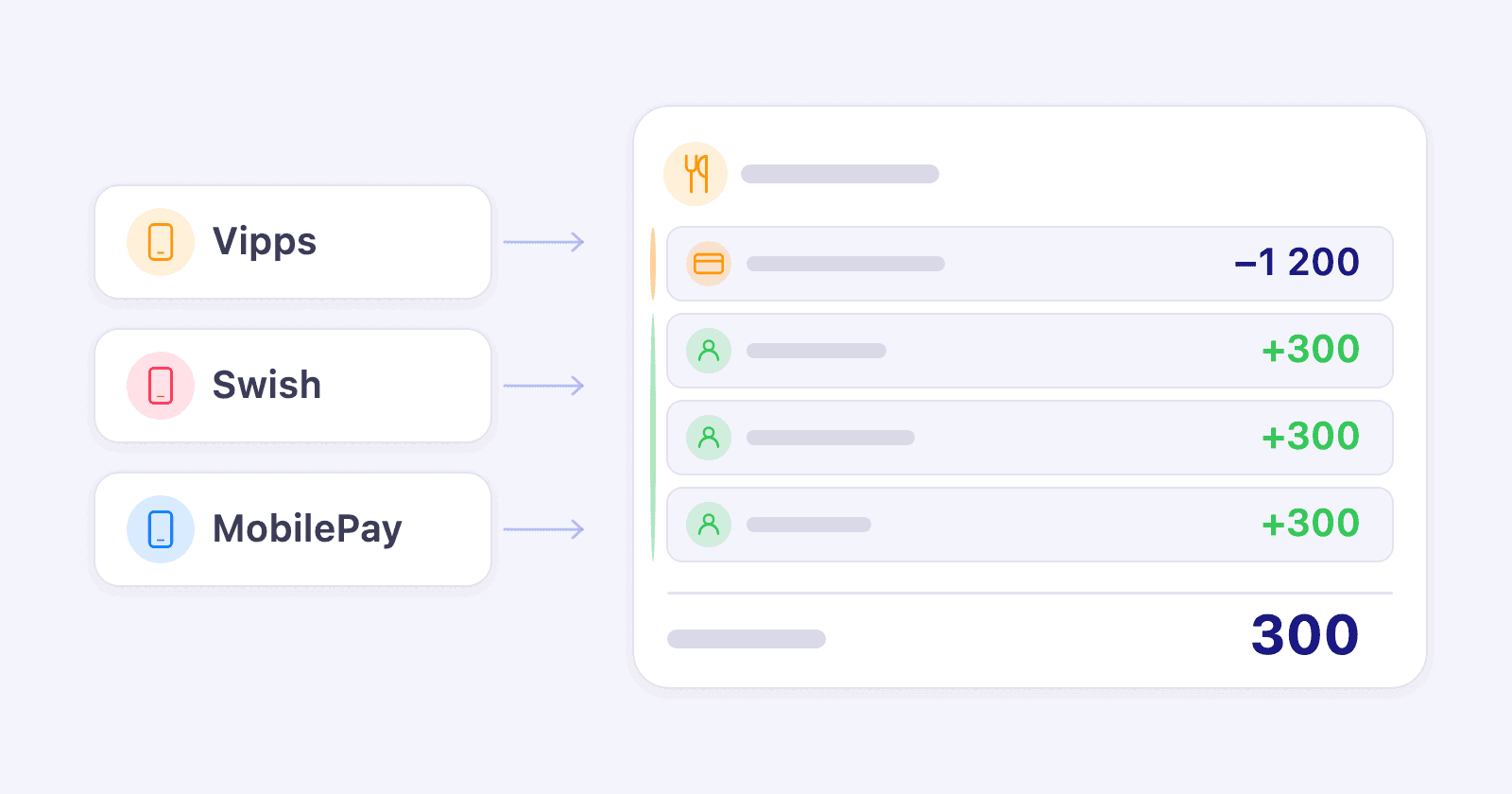
In the Nordics we settle up by phone. Half a dinner, a share of the cabin, twenty kroner for coffee. All of it lands in your account as money moving in both directions with almost no explanation, and a budget that treats it naively will lie to you.
Key takeaways
- A mobile transfer is spending, a refund of your own spending, or a move between your own accounts, and the three need different treatment.
- Money a friend sends you back is not income. Filed as income it inflates both what you earned and what you spent.
- Put the money that comes back in the same category you paid from, and the category shows what the evening actually cost you.
- A transfer to your partner is spending or a refund depending on what it covers. Transfers between your own connected accounts are neither, and Penge can pair them and keep them out of the spending figures.
- The habit that saves the most time is a two-word note at the moment you pay, not a cleanup session later.
Why do mobile payments break a budget?
Because the bank sends the service name and sometimes a first name, and nothing about what the money was for. The app cannot tell rent from a birthday present. It also cannot tell whether money arriving is income or the three friends paying you back for the dinner you covered.
Every mobile transfer you make or receive is one of three things. Once you name which, the rest follows.
| What happened | What it is | Where it goes |
|---|---|---|
| You paid your share of a dinner | Spending | The category the thing belongs to, so Restaurants |
| You covered the table and friends paid you back | A refund of your own spending | The same category you paid from, which nets the total down |
| You sent a birthday present | Spending | Gifts, or whatever you call that category |
| You moved money to your own savings | Neither | Kept out of spending as an internal transfer |
| Your partner sends their half of the rent | A refund of your spending | The housing category, not income |
The dinner problem, with numbers
You put a 1,200 kroner dinner for four on your card. Three friends send you 300 each the next morning. Two ways to file that:
- As income: the month reports 1,200 spent on restaurants and 900 earned. Both numbers are wrong, and next year's average restaurant budget is built on the wrong one.
- As a refund in the restaurant category: the category shows 300, which is exactly what the evening cost you.
Category totals are signed sums, so money coming back into a category reduces what that category shows for the month. This is the single change that makes a budget survive being the one who always pays.
Rent, kindergarten and the standing transfer
Households that keep separate accounts usually have one recurring transfer doing a lot of work: one person pays the joint bills, the other sends a fixed amount on payday. For the person paying the bills, that incoming amount is a refund and belongs against the bills. For the person sending it, the transfer is their share of the housing cost.
The alternative is to stop reconciling by phone and connect the joint account itself. That lets the underlying bills appear directly instead of treating one transfer as a bundle of costs. We go through both models in managing money as a couple.
The ones that are basically cash
Some mobile payments carry no trace of what you bought. The football team's fundraiser, a flea market table, a second-hand sofa from someone's living room. Treat them the way you would treat cash: place them from memory while you still have one, and add a note.
A note costs two words and answers the question you will actually ask in March, which is not how much did I spend but what on earth was that.
Does an app ever guess these correctly?
For recurring payments, usually yes; for one-off transfers between people, no. Every transaction arrives with a category suggested from your own history, and you confirm it with one tap. Turn on automatic categorization in settings and Penge applies the most confident ones by itself, never overwriting a category you set. One-off mobile transfers may still need your attention.
Budget calculatorSplit your income with the simple 50/30/20 rule.How the suggestions are built, and what turning on automatic categorization changes, is covered in automatic categorization.
Get a full overview with Penge
Connect your bank and let the app categorize and budget automatically.
Frequently asked questions
- Should money from friends count as income?
- No, not when it repays something you already bought. That returns money you had, so it belongs against the spending it covers. Only money that actually makes you richer is income: salary, interest, or a genuine gift someone sends you.
- How does Penge handle transfers between my own accounts?
- When both accounts are connected, Penge can pair the two sides when bank data shows opposite amounts on the same date in the same currency and matching account details. It marks both with the internal-transfer category, which keeps the movement out of the spending figures.
- Can I split one payment across several categories?
- Yes. A single card payment can be divided across categories, which is what you need when one purchase at the grocery store was half food and half a birthday present.
- What about the ones I genuinely cannot remember?
- Put them in a category you have chosen for exactly that, keep it small, and check whether it grows. A steadily growing unknown pile is itself useful information about how you pay for things.
- What if the money comes back in a different month?
- The repayment reduces the category in the month it arrives. A dinner on the 31st repaid on the 1st makes one month look expensive and the next look cheap, so judge categories like restaurants over two or three months rather than a single one.